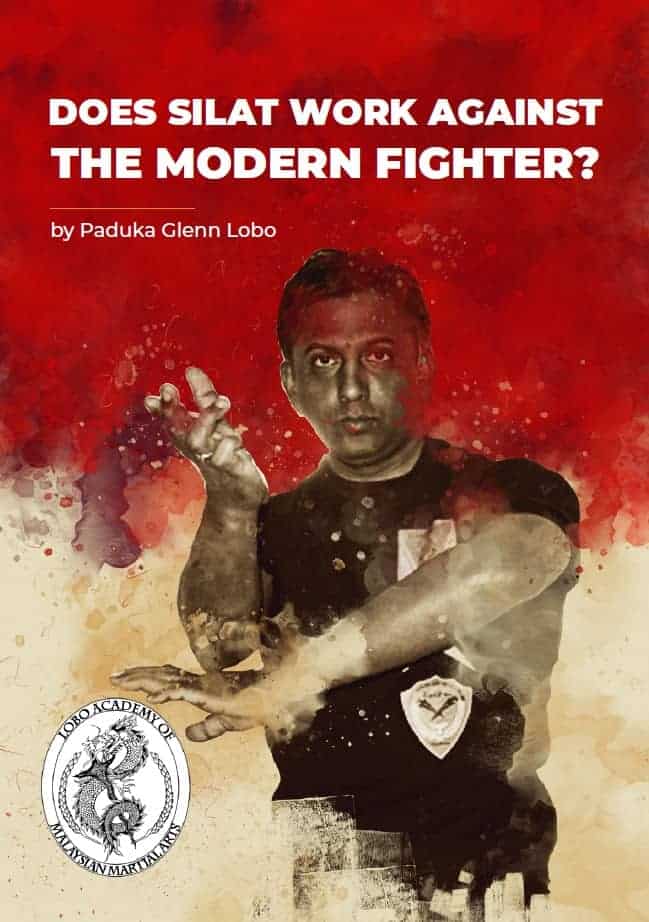
As martial artists and people we are always on the lookout for something new exciting unique or beautiful.
In my development I found all that in Silat. The Art of the Malay People.
Before the Europeans arrived to “trade” with and subjugate the area it was referred to as Nusantara. It was the centre of the spice trade routes for hundreds of years- trading through Australasia, as far as India. Since then, the area was divided up by Dutch, Portuguese, Spanish and the British, creating Indonesia, Malaya/ Malaysia, Singapore, and the Philippines.
Silat is primarily a weapons art, and before the term was coined, it was, according to Silat historian Tuan Ismail Tuan Soh, called Pertikamen- meaning “to stab”. Silat is a fighting art. One of my teachers, Guru Jak Othman, said that Silat comes from the Malay word “Kilat” meaning “Lightning”.. so a Pesilat- a person who practices Silat- should be bright, evasive, elusive, explosive, unpredictable, dynamic, powerful and bright!
While I am sure it was used in battle, it appears to be a sole practitioner art. It is also a duelling art. There are many unique and varied weapons in Silat- the standard stick, long stick, parang (machete), Pisau, (knife), badek (Different style of knife!) The signature weapon of Silat is the Keris. It is symbolic as an heirloom, and for its spiritual value, many it is believed are imbued with a spirit by the makers! To me, if your style doesn’t use a Keris, you aren’t doing real Silat. I see styles where their logos have a Keris, but the teachers don’t use them. But there are more- the kerambit has been made famous in films like Taken, and John Wick 3; kapak kecil- a small toffee hammer size axe; ikor pari- stingrays- tail that works like a whip with sandpaper on it!; celurit is another famous weapon- mainly from Madura, unlike the sabit which is a grass cutting tool!
Obviously Silat can work and train unarmed, and in these times where carrying a weapon will probably get you a custodial sentence, understanding weapons behaviour, and being able to deal with it is critically important, while still keeping yourself within the law.
For me, Silat is MORE than just a fighting art.- It also is a guide for living- humility, honour, respect, integrity, loyalty and brotherhood; and to instil self-discipline, and self-confidence. One of the things that I learned early on in Silat is that my teachers in Malaysia LIVED their beliefs rather than just paid these tenets lip service. It encouraged me to be a better person through my training.
Throughout Europe the prevailing Silat styles come from Indonesia where Silat is referred to as Pencak Silat. In the other countries from which Silat is said to originate- namely Malaysia, Singapore, and Thailand, it is referred to as Seni Silat. Pencak/ Pentjak/ Penchak is said to refer to the training of the art, and Silat as the fighting aspect. For me that shows a split in the philosophy as though there is a difference between training for a fight, and actual fight. In the other areas, it is called Seni Silat- the art of fighting. This makes more sense for the Silat philosophy- Malaysian Silat is fluid, adaptable and expressive, rather than mechanical robotic and like painting by numbers.
One of the great Silat gurus of the past was my friend Pak Hj. Sutin of Silat Hulubalang. He said that “Seni without Silat is pointless; Silat without Seni is merely fighting!”. For it to BE Silat it must have both aspects. There are many styles I have seen in Indonesia, and Europe where the Seni is ignored as pointless and soft and of no function. Sadly they don’t have a full understanding of this. Ignore it at your peril!!
Silat is said to have 4 aspects in the modern world- Sport; self-defence; Seni (artistic); and Spiritual.
In Malaysia there are over 500 styles of Silat, while in Indonesia, there are over 7,000. In Europe we have barely seen 10% of these!!
For the Indonesian Silat there seems to me a commonality amongst regions. The various styles of Javanese Silat tends to look quite similar, as they all seem to have common roots in the 4 original styles of Javanese Silat- Cimande, Syabandar, Kare, Madi. Likewise in Sumatra, the Minangkabau styles are all very similar, varying from one another by a few techniques, while claiming their totally different nature!
When I was in Indonesia training, I met an American lady from a local style. She told me that the style she was studying was basically Chinese Kung Fu, but that it had been silatised- so names changed to Indonesian, to make it acceptable to the Government officials that regulate these things. They used to say if you want to do Chinese or Korean arts we will give you problems, but if you convert these to Silat everything is fine.. So there are many styles of Indonesian Silat where this is the case. When I was looking to study Silat I decided to train Malaysian Silat for a variety of reasons but one of them was that I wanted to KNOW that what I was learning was actually Silat, and not something passed off as silat with a name change. In Malaysia, many of the arts are more rudimentary, more basic, because real combat is raw, simple and hard. There is still a lot of sophistication in the arts, as you will see when you train them, but it still works on a combat level.
Seni is all important in Silat. It is the glue that ties everything together. Between techniques is the Seni. It is the art of movement, deception, assessing your opponent.
People talk about Silat as being like a tree:
The roots are your culture and heritage and values. The trunk is your Silat. The branches are the different styles of Silat. From the branches you have flowers- the Bunga. This is also known in Silat as the Tari Bunga- flower dance. It is like Thai dancers, but for fighting. This is the Seni- the softer expression of you fighting art. From the flower you get what? Fruit. This is the Buah in Malaysian Silat.. This is the fighting techniques. But a lot of the fruit in Asia comes with a tough outside!! Not like apples, they have a skin you need to open. So from the basic techniques you have Pecahan. Pecah means to open, so you take the basic fruit, which are ok, but to get the goodness out of them, you have to open them!!
Then inside the fruit you have the goodness which you ingest.. along with the seeds.. which you then pass on to the students.. the Biji.
This is the cycle of Silat.
Humility is a key factor in Silat. I have met some of the top masters in Asia, but they are still very humble. Many practitioners in the West would do well to learn this from the old masters. It is very difficult to spread your art, while still showing humility! In Silat we talk about the philosophy of the Padi.. When a rice stalk is young it stands tall and proud.. like a new student in Silat. They think they are tough and hard and have something to prove and show off their strength and skills.. but their head is empty.
As you learn more in Silat and your head fills with greater knowledge you should be like the rice which as it grows and develops and the weight of the rice increases it bows it’s head to the earth. So as you learn more you should bow your head in humility.
There are 3 types of arts into which Silat is categorised:
Tari
Pukulan
Jatohan.
ALL styles of Silat have all 3, but the EMPHASIS may be different. For example, Lincah is a Pukulan style, Silat Sikume- Silat KUNCHI melayu, is a locking and throwing art. And Silat Pulut, which is mostly performed at weddings and ceremonies, is mostly dance. There is also a style CALLED Pukulan. This is an Indonesian style. Many years ago, each area had an art of fighting, and they had different names. Maen po, Silat, Silek, Pukulan etc. So to say you do a Pukulan style of Silat, is not the same as to say you do Pukulan. Some will play on the semantics of Pukul means strike- so a Pukulan art can be karate tae kwon do, etc. they are not silat and they are not Indonesian Pukulan. Just because someone uses the terms, and has trained with the right people doesn’t mean they either have authority to teach it, or the right knowledge or attitudes.
To be a Guru in Silat is another very specific term. Guru means “teacher”. And can be a teacher of French, or Maths, or yoga.. BUT in Silat a Guru Silat should have a higher level of spiritual development- by which I mean a higher calibre of character that is not necessary for a teacher of French. Cikgu is another term used for a silat teacher coming from the term “Encik Guru”- “Mister teacher”. In Indonesia you have a Pelatih, in Malaysia a Jurulatih. These translate as “ a person who coaches” or an “expert in training”- ie on both counts a Coach. Lots of Western silat teachers think that because someone called them “guru” they are a “GURU”. Sadly that isn’t the case, but it wont stop them from claiming the titles.
With Silat only recently coming out more from South East Asia, there will be lots of problems to come, many are already here!! You can avoid these by training with people who are known, and not just those who COME from the Area.. Look at peoples history where they appeared and who they trained with BEFORE they were famous. Just because they do seminars, doesn’t make them Guru silat.. It is said that with Indonesians emigrating to Holland after independence, more gurus were created on the flight over to Europe than left Indonesia!!
Coming from the land of the Bogey Man, the Malay peoples can be quite superstitious! The Bogey Man is actually a mis-pronunciation of the Bugis Man.. The bugis were pirates in and around Malaysia and Indonesia, and they harassed Shipping in the area. Hence the saying “the Bugis man is coming to get you!” In the same way I remember hearing that someone was running amuck, which is from the Malay “Amok”.
Indonesia also has a lot of animal styles- tiger monkey crocodile and snake are the main ones though newer developments seem to incorporate boar, cat, and horse?!?! Some style choose to copy the movements of the animal, some to copy the main attributes of it. Malaysian silat took a more pragmatic approach. AM I a tiger? No. Then I best not fight like one. I don’t have the claws, the weight, the camouflage, and since many of these animals are stealth hunters they aren’t fighting an equal or better opponent. Some people will tell you that Tiger silat is the most lethal because tigers are the biggest predators in the world and therefore tiger silat is so deadly. Tigers haven’t taken over the world. Bruce Lee moved away from the “classical mess”. The Malaysian idea is that we are human, better to fight like a human. We use tools- keris, knife, spear, stick. After all, humans are quite good at finding ways to kill each other. Silat is one of the few arts that has remained true to its original objectives. Silat is a massively effective structured fighting and killing art. What we have done is analyse our techniques and principles and developed them a little further to make it a modern art for western audiences. We have simplified the learning process, demystified the jargon, and present to you a simple, effective balanced all round fighting art.